When Pilots Should Fly or Request Alternate Missed Approach Instructions from ATC
A missed approach is a normal and often expected part of instrument flying. The FAA publishes a missed approach procedure with every instrument approach, designed to provide obstacle clearance and safe routing. However, there are times when it may be safer or more efficient for a pilot to fly alternate missed approach instructions from ATC.
✈️ Lessons from Two Missed Approach Scenarios – It happened to me twice in June of 2025
1. Alabama – Severe Weather on Both Sides of the Airport
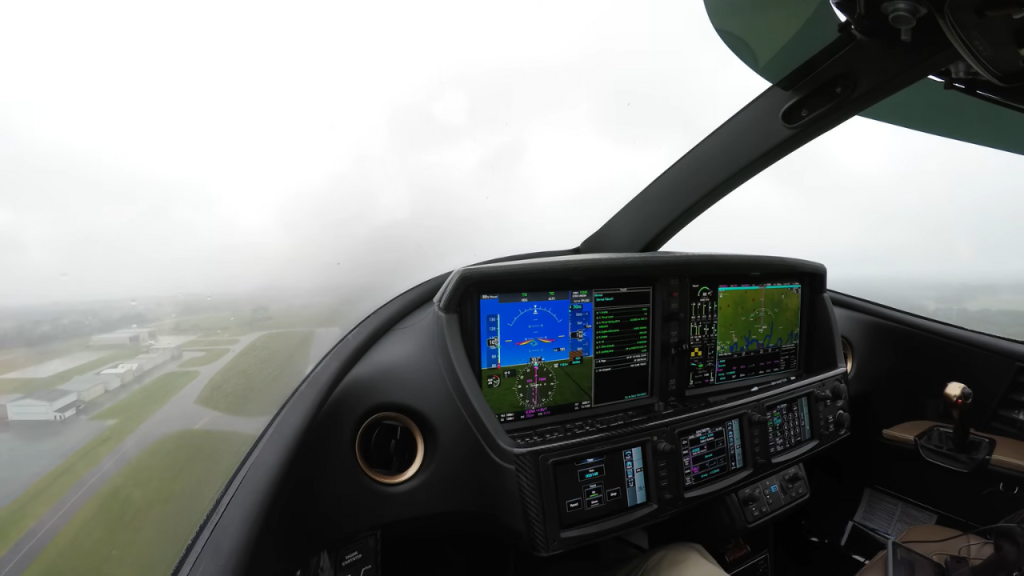
- Situation: Two lines of severe thunderstorms bracketing the destination. ATC cleared the ILS RWY 24 while another aircraft flew the RNAV RWY 18. The regional jet on approach to RWY 18 goes missed for an undetermined reason, increasing stress. Approaching inside the FAF, the CDI lateral guidance dropped out, radios filled with P-static, and ATC reported extreme precipitation over the field.
- Challenge: The published missed approach for RWY 24 would have flown directly into lightning and heavy weather.
- Action Taken: Requested alternate missed approach instructions (runway heading + climb to 3000). ATC approved. Lateral guidance reappeared at 3 NM, landing was completed safely.
- Takeaway: The published procedure isn’t always the safest option. Asking ATC for alternate instructions in advance can prevent an escape maneuver from leading into greater danger.
2. Tennessee – Isolated Cell on Final Approach
- Situation: Approaching an airport with one isolated but powerful cell obscuring the final approach. The published missed approach would have routed into congested airline traffic.
- Challenge: Weather reduced visibility quickly, and the safe escape path conflicted with very busy airspace.
- Action Taken: TRACON (approach) controller prompted: “Let me know if you want alternate missed approach instructions.” That reminder reframed the situation—having a pre-coordinated alternate plan provided assurance, even though the approach was completed successfully.
- Takeaway: In busy or weather-impacted airspace, the “default” missed approach path may not be safe. Thinking ahead and coordinating with ATC early is key.
🔑 Big-Picture Lessons
- Brief the published missed approach every time, but also think ahead:
- Where will that path take me if I have to go missed?
- Is it safe given today’s traffic, terrain, and weather picture?
- Don’t hesitate to request alternate instructions if the published procedure would put you in harm’s way. Controllers often have the bigger picture of weather cells, traffic flow, and protected sectors.
- Subtle clues from ATC aren’t really subtle:
When a controller says “let me know if you want alternate missed approach instructions”, it’s a nudge that they’re concerned about your safety if you go missed on the published track. - Weather + workload = decision fatigue: These are exactly the moments when having a flexible mindset, asking for help, and seeking alternatives makes the difference between a tough landing and an unsafe escape.
Why Missed Approaches Matter
Missed approaches are not failures—they’re safety tools. Weather, traffic, unstable approaches, or loss of situational awareness can all trigger the need to go missed. The published procedure ensures separation from terrain and obstacles, but it may not always be the most operationally efficient choice.
When to Use the Published Missed Approach
Pilots must fly the published missed approach procedure unless ATC issues alternate instructions. By default, this keeps you protected and predictable. Typical triggers include:
- Runway not in sight at DA/MDA
- Unstable or unsafe approach
- Unexpected traffic or runway incursion
When to Request Alternate Missed Approach Instructions
There are practical situations where requesting alternate instructions in advance—or accepting them in real time—makes sense:
- Anticipated Traffic Flow: ATC may prefer you to re-enter a holding pattern, vector to another approach, or remain clear of departure traffic.
- Operational Efficiency: If you know you’ll likely try the approach again, it may be quicker to request vectors back to the final approach course rather than fly the full published procedure.
- Terrain/Weather Considerations: In mountainous areas or rapidly changing weather, alternate missed approach vectors may provide safer or smoother handling.
- Training Flights: During practice approaches, you may brief ATC ahead of time that you’d like to be vectored for another approach instead of flying the published missed.
Best Practices for Pilots
- Brief the Published Procedure First: Always plan to fly the published missed approach unless you have coordinated otherwise.
- Communicate Early: If you want alternate instructions (e.g., “request vectors for another ILS if missed”), tell ATC before beginning the approach.
- Be Ready to Execute Either Plan: Even if ATC offers alternate instructions, you must be able to safely fly the published missed if communication is lost.
- Maintain Situational Awareness: Whether flying the published or alternate missed, always verify terrain clearance, aircraft performance, and weather conditions.
Circling Missed Approach (AIM 5-4-21 & 5-4-23)
General Rule: If you initiate a missed approach during a circling maneuver, you must make a climbing turn toward the landing runway before proceeding to the missed approach point (MAP) or following published missed approach instructions.
- Key Points:
- Many pilots have a general policy reusing to do circling approaches. This is a legitimate concern, for various reasons, but also unavoidable at certain airports.
- It is true that circling approaches are technically “visual” approaches and flown at higher circling minimums; however, what happens if you are forced into a “go around” by the tower controller, misalignment with a parallel runway, conflicting aircraft, or other cause?
- Direction of Turn: Always turn toward the runway to remain within the protected circling airspace.
- Obstacles: This ensures you stay in the circling protected area, which provides obstacle clearance only if you remain within it.
- Rejoining Missed Approach: After establishing a climbing turn toward the runway, continue to follow the published missed approach procedure unless ATC issues alternate instructions.
- Example: If circling to land on Runway 18 from an approach aligned with Runway 36, and you must go missed while on downwind or base, begin a climbing turn toward Runway 18 before navigating to the MAP and then follow the missed approach.
- The Wrong Time to be Confused:
- A very experienced pilot once told me to ALWAYS REQUEST ALTERNATE MISSED APPROACH INSTRUCTIONS WHEN FLYING CIRCLING APPROACHES.
- If you are conducting a circling approach for intersecting runways getting back on track for the published missed approach procedure could be difficult and confusing.
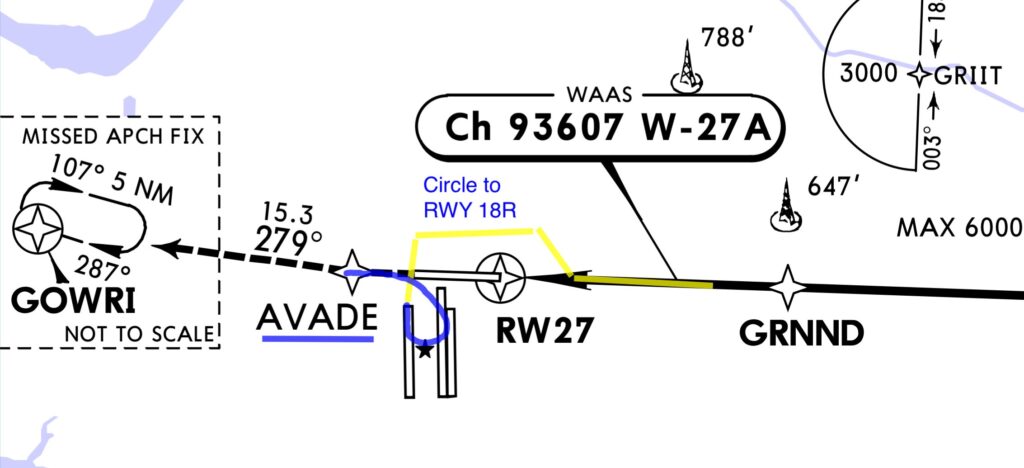
- For example: You are flying the Memphis RNAV RWY 27, Circle to RWY 18R. The missed approach procedure for RNAV RWY 27 is a climb to 5000 feet and direct to AVADE. If you go missed after lining up with RWY 18R, then the missed approach for RWY 27 would be a an arbitrary left turn to turn toward the center of the airport, while climbing, and then direct to ADVADE. What if MEM has aircrafts landing on RWY 18C or 18L? If you follow the AIM, you might overfly aircrafts landing on the parallel runways.
- Make it simple and ask ATC for alternate missed approach instructions for circling approaches to remove any confusion and ambiguity.
- Why It Matters:
Circling approaches are designed with limited protected airspace. Immediate compliance with the “climb toward the runway” rule keeps you in safe airspace and avoids obstacles until you can safely intercept the published missed approach path.
Final Thoughts
The published missed approach is your safety net, but alternate missed approach instructions can often improve efficiency and traffic flow. The key is proactive communication with ATC. By briefing both the published and any expected alternate instructions, pilots can ensure safety while minimizing workload and surprises when a missed approach is required.
Disclaimer: This material is based upon AIM and FAA guidance. It is provided for informational purposes only and is not intended or construed as flight instruction. Pilots should always follow FAA regulations, aircraft flight manuals, and the direction of qualified instructors.