Cirrus Vision Jet G2+ vs. G3: What’s Changed and Is It Worth the Upgrade?
Having owned both Generation 1 and Generation 2+ Vision Jets, and having flown more than 45 different Vision Jet serial numbers since 2020, I’ve found that the fundamental flying experience is remarkably consistent across all four generations. Whether you’re flying a G1, G2, G2+, or G3, they all deliver the performance, simplicity, and confidence that make the Vision Jet so unique. Newer features like Hot & High performance, Safe Return™ Emergency Autoland, factory-installed Wi-Fi, and autothrottle certainly enhance the ownership experience, but in day-to-day operations they all cruise at nearly the same speeds and accomplish the same missions exceptionally well. As I prepare to take delivery of my own G3 in mid-2027, I wanted to offer an objective comparison between the G2+ and G3. The good news for prospective buyers is that there’s a Vision Jet for nearly every budget and aesthetic preference—and that’s one of the reasons the Vision Jet continues to enjoy such strong demand in the marketplace.
— Don Medine
SF50 Vision Jet Owner • Professional Pilot • Founder, SF50 Flight Support
One of the most common questions we receive at SF50 Flight Support is:
“Should I buy a Generation 2+ (G2+) Vision Jet, or is the Generation 3 (G3) worth the extra investment?”
The answer depends on your mission, budget, and how you intend to use the aircraft. While the G3 builds upon the success of the G2+, the two aircraft share far more similarities than differences. For many owners, a well-equipped G2+ remains an outstanding value. For others, the G3’s enhancements may justify the additional purchase price.
Let’s compare the two generations.
The Similarities
Before discussing the differences, it’s important to understand that both aircraft offer the core features that have made the Vision Jet the world’s best-selling single-engine jet.
Both the G2+ and G3 feature:
- Williams International FJ33-5A turbofan engine
- Garmin Perspective Touch+ flight deck
- Safe Return™ Emergency Autoland
- Autothrottle
- CAPS® (Cirrus Airframe Parachute System)
- Single-pilot operation
- Seating for up to seven occupants
- Certified ceiling of FL310
- Factory-installed Wi-Fi
- Carbon-fiber composite construction
In other words, you’re getting the same fundamental Vision Jet experience regardless of which generation you choose.
Generation 3 Improvements
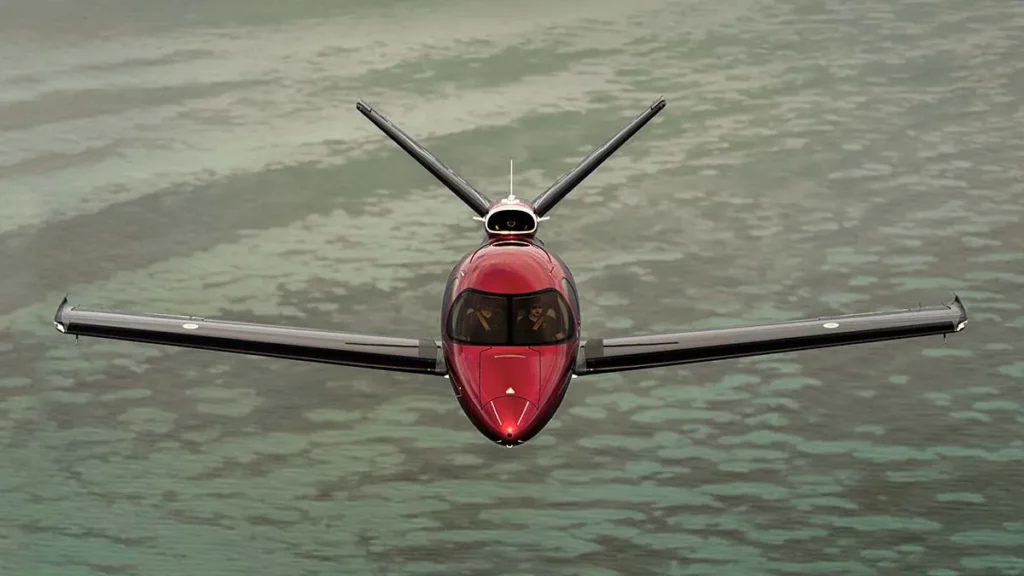
The G3 wasn’t designed to reinvent the Vision Jet—it was designed to refine it.
Increased Maximum Takeoff Weight (not really)
What actually happened in the G3 is Cirrus reduced the aircraft’s empty weight through design refinements, allowing the G3 to carry approximately 2,450 pounds of useful load, giving owners more flexibility for passengers, baggage, and fuel while remaining within the same 6,000-pound MTOW limit.
This allows owners greater flexibility when carrying passengers, baggage, and fuel.
Depending on your typical mission, the additional useful load may eliminate the need to make compromises between fuel and payload.
If you frequently travel with four or five adults and luggage, this improvement alone may justify considering a G3.
Improved Mission Capability
The increased payload gives pilots greater flexibility on longer trips.
Instead of choosing between:
- carrying additional passengers
- carrying baggage
- departing with full fuel
the G3 often allows more of those goals to be accomplished simultaneously.
For many business travelers, this translates directly into fewer fuel stops and greater dispatch flexibility.
Updated Interior
Cirrus also introduced several refinements to the cabin. The G3 has seating for up to six persons greater than 90 lbs., where the other generations have seating for five people over 90 lbs plus two seats for persons under 90 lbs.
Although the overall cabin layout remains familiar, the G3 includes subtle improvements to interior materials, finishes, and passenger comfort.
These changes aren’t revolutionary but contribute to an even more premium feel.
Continued Refinement
Like every new aircraft generation, numerous small improvements were incorporated into the G3 based upon years of owner feedback. Improvements in the avionics with datalink/CPDLP, wireless database and charts updates and replacement of the air conditioning inlet door with louvered design are great improvements over previous generations. In addition, the design and material elements are very impressive in the G3.
Many of these changes aren’t immediately noticeable but contribute to improved reliability, usability, and the overall ownership experience.
Is the G3 Faster?
Not really.
Cruise speeds remain essentially the same.
Typical cruise continues to be approximately:
- 300–315 KTAS
- FL280–FL310 operating altitudes
- Similar climb profiles
- Similar fuel burn
- Maximum Mach increased in aircrafts with G3 software from 0.53 to 0.54 Mach
If you’re expecting a significant performance increase, you probably won’t notice one.
Operating Costs
Operating costs between the two generations are remarkably similar. Obviously, acquisition prices differ dramatically as the generations advance. G3 Vision Jets are approaching $4.0m USD with substantial JetStream program coverage. The current wait time for a G3 Vision Jet is around twenty-four months.
Current G1 Market: ~$1.8m USD. Current G2 Market ~$2.6m USD. Current G2+ Market ~$2.8. Current used G3 Market $4.0m to $4.4m USD due to very few G3 Vision Jets in the used market.
*Market values are averaged and are affected by aircraft history, flight hours, condition and color scheme.
Owners should expect comparable costs for:
- Fuel
- Engine maintenance
- JetStream
- Insurance
- Scheduled inspections
The primary financial difference is the purchase price rather than day-to-day operating expenses.
Should You Buy a G2+?
Absolutely.
The G2+ remains one of the best values in personal turbine aviation.
You receive:
- Safe Return
- Autothrottle
- Wi-Fi
- Outstanding runway performance
- Modern Garmin avionics
- Excellent resale value
For many owner-pilots, a late-model G2+ represents the “sweet spot” in the Vision Jet market.
Depreciation has already occurred while retaining nearly every feature most owners desire.
When Does the G3 Make Sense?
The G3 becomes particularly attractive if:
- You routinely fly with four or more adults.
- Your missions require maximum payload.
- You frequently travel with luggage and golf clubs.
- You prefer purchasing the newest available model.
- The additional acquisition cost fits comfortably within your budget.
- Able to wait up to 24 months for delivery.
The additional payload flexibility can make day-to-day operations noticeably easier.
Which One Would We Recommend?
At SF50 Flight Support, we don’t begin by recommending a specific generation.
Instead, we start by understanding your mission, budget and preferences.
Questions we typically ask include:
- How many passengers do you normally carry?
- What is your average trip length?
- Will you operate from short runways?
- How many hours do you expect to fly annually?
- What’s your acquisition budget?
- Is resale value an important consideration?
Once those questions are answered, the right aircraft often becomes obvious. We also create a full plan for you and your ownership, to make them more enjoyable.
Sometimes it’s a beautifully equipped G2+.
Other times, it’s a G3.
Our Perspective
Having flown numerous Vision Jets and worked with owners throughout the acquisition process, we’ve found that many buyers initially focus on model year rather than mission capability.
The “best” Vision Jet isn’t necessarily the newest one—it’s the one that best fits your mission, budget, and long-term ownership goals.
For many pilots, that’s a Generation 2+.
For others, the increased payload and refinements of the Generation 3 make it the better choice.
Both aircraft represent exceptional examples of modern personal aviation.
Need Help Choosing?
If you’re comparing Vision Jets, SF50 Flight Support provides independent acquisition consulting, market analysis, pre-purchase guidance, and operational support tailored specifically to the Cirrus Vision Jet.
We’ll help you compare aircraft, evaluate JetStream value, understand operating costs, and determine which generation best supports your flying mission—so you can make an informed purchase with confidence.
Let’s Connect
Whether you’re looking for a contract pilot, Supervised Operating Experience – SOE mentor, or long-term operational partner, SF50 Flight Support provides the reliability and expertise your Vision Jet deserves.
📍 Based in the Nashville area — supporting Vision Jet operations nationwide.
📧 Contact us today to discuss your upcoming flight needs. Call or text (615) 543-8553 or schedule a call.
For more video content, check out our – YouTube channel.